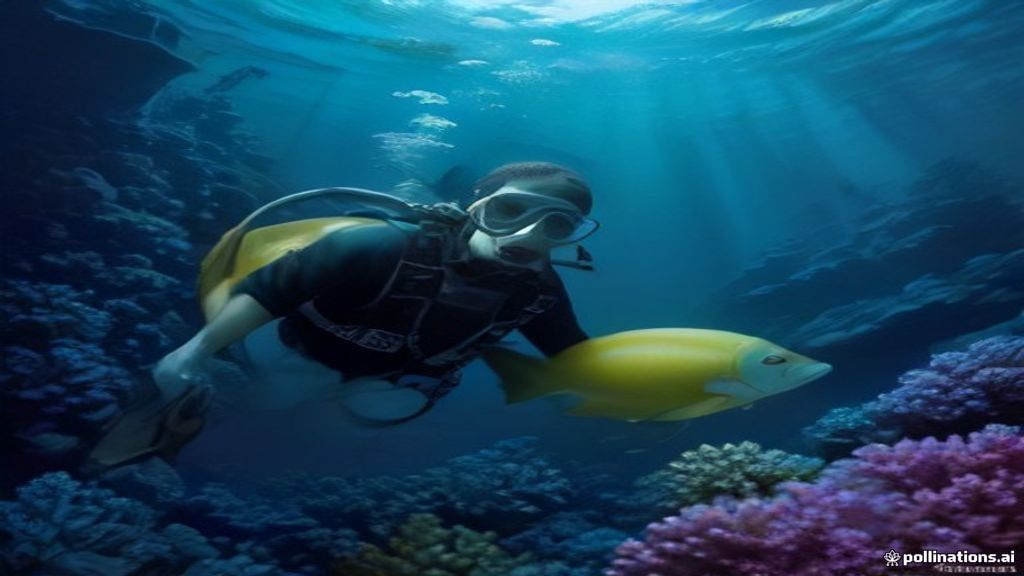
Executive Oceanic Dispatch & Technological Parameters
Lifespan: June 11, 1910 – June 25, 1997 | Major Technological Inventions: The Aqua-Lung (SCUBA regulator, 1943, with Émile Gagnan), Diving Saucer (SP-350 Denise, 1959), Conshelf underwater habitats (1962–1965) | Primary Expedition Vessel: RV Calypso (converted British Royal Navy minesweeper) | Filmmaking Laurels: Three Academy Awards (including The Silent World, 1956) & the Palme d’Or at Cannes | Global Legacy: Demolished the perception of the ocean as an inexhaustible dump, birthing modern global marine conservation.
For hundreds of thousands of years, the ocean surface was an absolute physiological ceiling. While sailors mastered canvas sails to cross the waves and fishermen dragged nets through the surf, the undersea universe—occupying over seventy percent of the planet’s surface area and ninety-nine percent of its living volume—remained completely inaccessible to human sight. Humans who entered the sea were tethered to surface air pumps by clumsy rubber diving suits and heavy brass helmets, condemned to clumsy, lead-weighted trudging along muddy harbor beds.
That ancient physical barrier was shattered in the dark days of Nazi-occupied France in 1943 by an eccentric French naval officer, filmmaker, and inventor: Jacques-Yves Cousteau (1910–1997). By co-inventing the Aqua-Lung—the world’s first open-circuit Self-Contained Underwater Breathing Apparatus (SCUBA)—Cousteau granted humanity the gift of three-dimensional, gravity-free flight beneath the waves. Aboard his legendary converted minesweeper, the RV Calypso, with his trademark red woolen watch cap and lyrical French narration, Cousteau brought the silent wonders and fragile ecology of the marine world directly into the living rooms of millions of global viewers.
The Automobile Crash and the Genesis of the Goggles
Jacques Cousteau’s path to the ocean was born of physical trauma. Entering the French Naval Academy (École Navale) in Brest in 1930, Cousteau trained as a naval aviation pilot. However, in 1936, a horrific automobile crash on a dark mountain road shattered both of his arms and broke multiple ribs, puncturing a lung. Doctors recommended amputating his severely infected right arm; Cousteau refused, resolving to rehabilitate his paralyzed limbs through daily swimming in the cold waters of the Mediterranean off Toulon.
It was there, in the summer of 1936, that a fellow naval officer, Philippe Tailliez, handed Cousteau a pair of crude underwater goggles fashioned from Polynesian pearl-diving gear. Sinking beneath the surface off Le Mourillon, Cousteau opened his eyes onto a vision that altered the course of his life: rocky reefs covered in sea anemones, shimmering schools of sea bream, and shafts of golden sunlight piercing the crystal-clear blue. As Cousteau later recalled: “Sometimes we are lucky enough to know that our lives have been changed, to discard the old, embrace the new, and run headlong into an unimaginable future. It was so with me on that summer day, when my eyes were opened to the sea.”
The 1943 Invention of the Aqua-Lung: The Open-Circuit Breakthrough
During the early years of World War II, while serving in the French Naval Resistance, Cousteau sought a way for divers to swim freely without surface hoses. Existing closed-circuit oxygen rebreathers used by Italian naval commandos were notoriously lethal below thirty feet, causing convulsions, loss of consciousness, and drowning due to pure oxygen toxicity under pressure.
What Cousteau needed was a mechanism that could deliver compressed normal air to a diver automatically, matching the exact ambient water pressure of the surrounding sea depth. In German-occupied Paris in December 1942, Cousteau met Émile Gagnan, an engineer at the gas corporation Air Liquide who had designed a miniaturized mechanical demand-valve regulator for automobiles running on cooking gas during wartime fuel shortages.
Together, Cousteau and Gagnan adapted the valve for underwater respiration, creating the Aqua-Lung. The system comprised three compressed-air tanks strapped to the diver’s back, delivering air on demand through a corrugated rubber hose via a diaphragm regulator: when the diver inhaled, negative pressure opened a valve releasing air at the exact pressure of the surrounding depth; when the diver exhaled, the spent breath bubbled harmlessly out into the water.
In June 1943, off the French Riviera beach of Bandol, Cousteau tested the prototype. Descending sixty feet, he executed slow-motion barrel rolls, swam upside down, and hovered weightlessly beside schools of fish. For the first time in history, a human was swimming underwater with the effortless freedom of a fish.
The RV Calypso: The Floating Oceanographic Laboratory
Following the liberation of France, Cousteau founded the French Navy’s Undersea Research Group (GERS). However, constrained by naval bureaucracy, Cousteau yearned for an independent civilian expedition ship. In 1950, he discovered a decommissioned, wooden-hulled British Royal Navy Yard Minesweeper (BYMS-26) rotting in a harbor in Malta.
Financed by British philanthropist Thomas Loel Guinness (who leased the ship to Cousteau for the symbolic sum of one French franc per year), Cousteau retrofitted the vessel into the world’s most advanced mobile oceanographic laboratory, naming her Calypso. Cousteau added revolutionary innovations:
- The False Nose (Underwater Observation Chamber): A reinforced steel observation blister bolted beneath the bow, eight feet below the waterline, fitted with five thick glass portholes allowing filmmakers to observe marine life while cruising at sea.
- The Diving Saucer (SP-350 Denise): Designed in 1959 with engineer Jean Mollard, this revolutionary two-man yellow miniature submarine could dive to 1,150 feet (350 meters), operated by jet thrusters and equipped with hydraulic claws.
- Helicopter Landing Pad: Mounted on the stern to deploy reconnaissance aircraft for tracking whale migrations and ice floes.
Conshelf: The Undersea Colonies (1962–1965)
Cousteau was not content with merely visiting the sea; he dreamed of humans living permanently on the continental shelf as a new biological species he christened Homo aquaticus. Between 1962 and 1965, Cousteau launched the historic Conshelf (Précontinent) saturation habitat experiments:
- Conshelf I (1962): Off Marseilles, two “oceanauts” (Albert Falco and Claude Wesly) lived for seven days in an underwater cylinder at a depth of thirty-three feet, breathing a compressed air mixture and swimming out daily to work on the reef.
- Conshelf II (1963): In the Red Sea off Sudan, Cousteau built a complete starfish-shaped underwater village at thirty-six feet depth, where six oceanauts lived for an entire month, complete with an underwater garage for the Diving Saucer and a deep cabin at eighty-five feet where two men lived for a week breathing a helium-oxygen mixture.
- Conshelf III (1965): Off Cap Ferrat, six divers lived for three weeks at a depth of 328 feet (100 meters), performing complex industrial oil-wellhead operations on the seafloor under twenty-one atmospheres of pressure.
Cinema Laurels: The Silent World and Television Fame
To fund his expensive expeditions, Cousteau was a pioneer of underwater cinematography, building custom waterproof pressure housings for 35mm cameras. In 1956, partnering with young film director Louis Malle, Cousteau released The Silent World (Le Monde du Silence). Shot in vibrant Technicolor in the Red Sea and Indian Ocean, the film stunned the world, winning the Palme d’Or at the 1956 Cannes Film Festival (the only documentary to win the prize until Michael Moore in 2004) and an Academy Award for Best Documentary Feature.
In 1968, Cousteau signed a historic television contract with ABC to produce The Undersea World of Jacques Cousteau. Running for eight years and broadcast in dozens of languages, the series turned Cousteau, Captain Falco, and the Calypso into household names, captivating hundreds of millions of children and adults who had never seen the vibrant colors of living coral reefs, whale sharks, or breaching humpback whales.
From Explorer to Global Environmental Defender
In his early years, Cousteau’s methods reflected the insensitive era: in The Silent World, the crew threw dynamite onto coral reefs to conduct fish censuses and accidentally ran over a sperm whale calf. But as decades passed and Cousteau returned to dive sites in the Mediterranean, Red Sea, and Caribbean, he was devastated by the catastrophic degradation unfolding beneath the surface: coral reefs bleached white and dead, fish populations collapsed by industrial bottom-trawling, and vast blankets of petrochemical plastic waste smothering the seabed.
Cousteau underwent a profound moral transformation, shifting his identity from explorer-entertainer to the world’s foremost environmental activist. In 1973, he founded the Cousteau Society, a non-profit marine conservation organization that quickly gathered over 300,000 members worldwide.
The Treaty Protecting Antarctica (1991)
Perhaps Cousteau’s greatest political achievement occurred in the late 1980s. When international mining and oil syndicates prepared to open the pristine wilderness of Antarctica to commercial oil drilling and mineral exploitation under the Wellington Convention, Cousteau launched a fierce global diplomatic crusade. Meeting directly with French President François Mitterrand, Australian Prime Minister Bob Hawke, and international leaders, Cousteau gathered five million petition signatures, successfully killing the treaty.
His efforts led directly to the 1991 Madrid Protocol to the Antarctic Treaty, designating the entire Antarctic continent as a “natural reserve, devoted to peace and science,” banning all commercial mineral extraction for at least fifty years. Cousteau had single-handedly protected an entire continent from industrial devastation.
Chronological Timeline of Jacques Cousteau’s Achievements
| Date | Milestone Category | Historical & Environmental Achievement |
|---|---|---|
| 1943 CE | Invention of the Aqua-Lung | Co-invents the modern SCUBA regulator with Émile Gagnan in occupied France. |
| 1950 CE | Acquisition of RV Calypso | Leases decommissioned British minesweeper, transforming her into oceanographic flagship. |
| 1956 CE | Palme d’Or & Oscar | The Silent World wins Palme d’Or at Cannes and Academy Award for Best Documentary. |
| 1959 CE | Diving Saucer SP-350 | Launches revolutionary two-man yellow submarine capable of diving to 1,150 feet. |
| 1962 – 1965 CE | Conshelf Habitat Experiments | Pioneers human underwater colonies (Conshelf I, II, III) on the continental shelf. |
| 1968 – 1976 CE | Television Phenomenon | The Undersea World of Jacques Cousteau educates hundreds of millions worldwide. |
| 1973 CE | The Cousteau Society | Founds non-profit global ocean conservation NGO. |
| 1991 CE | Madrid Protocol | Successful global campaign bans commercial mineral mining in Antarctica for 50 years. |
| June 25, 1997 | Paris, France | Cousteau passes away at age eighty-seven; mourned internationally as a planetary hero. |
The Philosophical Legacy: The Human Responsibility to the Biosphere
When Jacques Cousteau died in Paris in 1997 at the age of eighty-seven, he left behind a planet fundamentally transformed by his vision. He had taken humanity from fearing the ocean as an alien abyss into loving and protecting it as the biological cradle of life.
His philosophy was captured in his celebrated aphorism: “People protect what they love, they love what they understand, and they understand what they are taught.” Through technical ingenuity, cinematic poetry, and moral courage, Cousteau proved that the greatest frontier of exploration was not merely mapping geography, but awakening the human conscience to preserve the ecological heritage of future generations.
Key Archival Takeaways
- Technological Liberation: The Aqua-Lung SCUBA regulator democratized underwater access, transforming humans from surface-bound spectators into weightless ocean explorers.
- Living Under the Sea: The Conshelf habitat experiments proved the physiological feasibility of long-duration human saturation diving on the continental shelf.
- Environmental Legacy: Cousteau’s successful crusade for the 1991 Madrid Protocol permanently protected Antarctica from commercial industrial and mineral exploitation.
Frequently Asked Questions (FAQ)
What does “SCUBA” stand for?
SCUBA is an acronym that stands for Self-Contained Underwater Breathing Apparatus, describing any breathing system where the diver carries their own gas supply independently of surface air lines.
What happened to the RV Calypso?
In January 1996, while anchored in Singapore harbor, the Calypso was accidentally rammed by a commercial barge and sank in sixteen feet of water. She was salvaged days later and transported back to France, where extensive restoration efforts by the Cousteau Society continue.
Did Jacques Cousteau serve in the French Resistance during WWII?
Yes. While ostensibly serving as a naval officer, Cousteau operated as a spy for the French Resistance (Forces Françaises Libres), decoding Italian military ciphers and surveying German naval installations in southern France, for which he was decorated with the Legion of Honour and the Croix de Guerre.